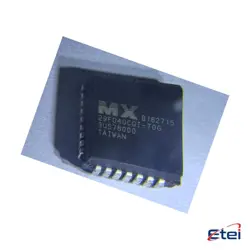
Imagens apenas para referência
EPM7512AETC144-10N
+Lista de MateriaisIC CPLD 512MC 10NS 144TQFP
-
FabricanteIntel
-
Peça do Fabricante #EPM7512AETC144-10N
-
Pacote TQFP-44
-
Em Estoque6595
365 Garantia de Qualidade em 1 dia
7*24 Garantia de serviço em 24 horas
90-Garantia de pós-venda em 1 dia
Garantia de Produto Genuíno
Especificações
| Atributo | Valor |
| Package / Case | Tray |
| Series | MAX® 7000A |
| Part Status | Obsolete |
| Programmable Type | In System Programmable |
| Delay Timetpd(1)Max | 10 ns |
| Voltage Supply - Internal | 3V ~ 3.6V |
| Number of Logic Elements/Blocks | 32 |
| Number of Macrocells | 512 |
| Number of Gates | 10000 |
| Number of I/O | 120 |
| Operating Temperature | 0°C ~ 70°C (TA) |
| Mounting Type | Surface Mount |
Visão Geral
Description
Key features include:
- High-density programmable logic suitable for a variety of digital circuit implementations.
- Non-volatile EEPROM-based architecture allowing the retention of configuration data without power.
- Low power consumption and high-speed operation with a typical propagation delay of 10 nanoseconds.
- Support for complex combinatorial and sequential logic designs, making it versatile for applications ranging from consumer electronics to industrial controls.
The device is ideal for designers needing a reliable, reconfigurable logic solution without the cost and complexity of ASIC development. It is programmed using Altera's Quartus development software, which provides tools for design, simulation, and testing.
Equivalent
Features
1. Density: Provides 512 macrocells, suitable for complex logic functions.
2. Package: Available in a 144-pin TQFP (Thin Quad Flat Pack) package, optimizing board space.
3. Speed: Offers a speed grade of -10, indicating moderate performance levels with a 10 ns pin-to-pin delay.
4. Low Power: Incorporates low-power design techniques, making it suitable for battery-operated devices.
5. Reprogrammability: Supports in-system programmability, allowing for updates and modifications without removal from the circuit board.
6. I/O Features: Offers flexible I/O options with TTL/CMOS compatibility.
7. Configuration: Utilizes EEPROM-based architecture for non-volatile configuration retention.
8. Design Support: Compatible with Altera's development tools for design simulation and synthesis.
These features make the EPM7512AETC144-10N suitable for a range of applications requiring configurable logic solutions, such as digital signal processing, telecommunications, and consumer electronics.
Pinout
The EPM7512A has the following key features and functions:
1. Pin Count: 144 pins.
2. Logic Elements: It contains 512 macrocells, which are the building blocks for creating combinational and sequential logic circuits.
3. Performance: With a speed grade of "-10," it offers a relatively fast performance, suitable for a variety of design applications.
4. I/O Pins: It supports numerous I/O pins which can be configured for input, output, or bidirectional signals, making it versatile for complex designs.
5. Programmability: The device is reprogrammable, allowing for the design to be iterated upon without changing hardware.
6. Applications: Typically used in digital design applications such as state machines, data path management, and interface logic.
This concise overview captures the essential characteristics of the EPM7512AETC144-10N, highlighting its capacity, versatility, and applications in programmable logic design.
Manufacturer
Intel Corporation, Altera's parent company, is a leading global technology company known for designing and manufacturing microprocessors, integrated graphics chips, and various semiconductor products. Intel's acquisition of Altera allowed it to incorporate Altera's technologies into its own offerings, facilitating advancements in areas like data centers, the Internet of Things (IoT), and artificial intelligence (AI). As a result, the Altera brand and its products, like the EPM7512AETC144-10N, are now part of Intel's broader range of semiconductor solutions.