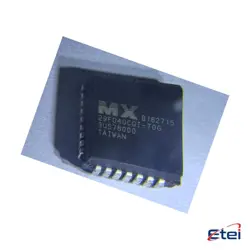
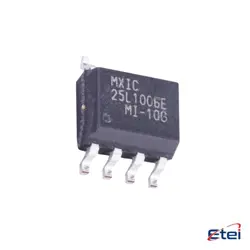
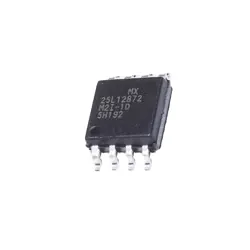
Imagens apenas para referência
N25Q128A13ESE40F
+Lista de MateriaisSO-8W Memory (ICs) RoHS
-
FabricanteMicron
-
Peça do Fabricante #N25Q128A13ESE40F
-
Em Estoque8316
365 Garantia de Qualidade em 1 dia
7*24 Garantia de serviço em 24 horas
90-Garantia de pós-venda em 1 dia
Garantia de Produto Genuíno
Especificações
| Atributo | Valor |
| Packaging | SO-8W |
Visão Geral
Description
Key features include a high data transfer rate of up to 104 MHz, dual and quad SPI modes for enhanced performance, and support for uniform 4KB sectors and 64KB/256KB subsectors. The N25Q128A13ESE40F also offers advanced security features such as password protection and hardware-based write protection to ensure data integrity.
The device is packaged in a compact 8-lead SOIC form factor, making it suitable for space-constrained designs. Its robust performance and reliability make it an ideal choice for applications in consumer electronics, automotive, industrial, and networking sectors.
Equivalent
1. W25Q128JV by Winbond
2. S25FL128S by Cypress (Infineon)
3. MX25L12835F by Macronix
These alternatives have similar specifications and functionality, suitable for applications requiring serial NOR Flash memory. However, always verify compatibility with your specific application requirements.
Features
Key features include a clock frequency of up to 108 MHz in SPI mode and 54 MHz in Dual/Quad SPI mode, which facilitates quick data access. The chip also supports Execute-in-Place (XiP) functionality, enabling direct code execution from the Flash memory, useful for systems requiring fast boot times.
The N25Q128A13ESE40F includes security features such as a hardware-based write protection mechanism and support for sector-based protection. Additionally, it has a long data retention of 20 years and can endure up to 100,000 program/erase cycles, ensuring durability and reliability in various applications.
Pinout
Here's a brief overview of the pin functions:
1. S# (Chip Select): Activates the device when low.
2. C (Clock): Provides the clock signal for data transmission.
3. DQ0 (Serial Data Input/Output 0): Data input/output pin.
4. DQ1 (Serial Data Input/Output 1): Data input/output pin.
5. DQ2 (Serial Data Input/Output 2): Data input/output pin.
6. DQ3 (Serial Data Input/Output 3): Data input/output pin.
7. VCC: Power supply pin.
8. VSS (Ground): Ground reference.
These pins allow the N25Q128A13ESE40F to perform read, write, and erase operations, supporting enhanced performance operations like Dual I/O and Quad I/O, which make it suitable for various applications.
Manufacturer
Application
1. Consumer Electronics: Used in devices like smartphones, tablets, and wearables for firmware storage.
2. Automotive: Supports infotainment systems, navigation, and in-car entertainment.
3. Industrial: Utilized in automation, control systems, and data logging for its robustness.
4. Networking: Employed in routers and switches for configuration and system data storage.
5. IoT Devices: Provides efficient data management in connected devices and smart technologies.
6. Telecommunications: Facilitates storage in communication equipment for configuration and operational data.
Package
Frequently Asked Questions
Q: What is the packaging type of N25Q128A13ESE40F?
A: It comes in an SO-8W (Small Outline 8-pin Wide) package, suitable for compact surface-mount designs.
Q: Is this component a NOR Flash memory device?
A: Yes, the N25Q128A is a 128Mb (16MB) serial NOR Flash memory from Micron, ideal for code and data storage.
Q: What is the voltage range for this Micron N25Q128A part?
A: While not specified here, the N25Q series typically operates at 2.7V to 3.6V; verify with the datasheet for exact specs.
Q: Can this flash memory support high-speed SPI interfaces?
A: Yes, the N25Q series supports standard SPI, Dual SPI, and Quad SPI interfaces for flexible read/write speeds.
Q: Is the SO-8W package suitable for automated assembly?
A: Absolutely; the SO-8W footprint is standard for reflow soldering and pick-and-place machinery, supporting high-volume production.
Q: How does the 128Mb density benefit embedded applications?
A: It provides sufficient storage for boot code, firmware, or configuration data in IoT, automotive, or consumer devices without excessive board space.