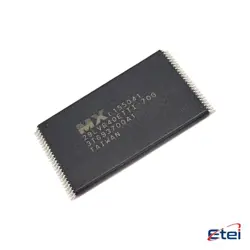
Imagens apenas para referência
PDTC144WM315
+Lista de MateriaisNOW NEXPERIA PDTC144WM - SMALL S
-
FabricanteNXP USA Inc.
-
Peça do Fabricante #PDTC144WM315
-
Ficha Técnica PDTC144WM315 DataSheet
-
Em Estoque7937
365 Garantia de Qualidade em 1 dia
7*24 Garantia de serviço em 24 horas
90-Garantia de pós-venda em 1 dia
Garantia de Produto Genuíno
Especificações
| Atributo | Valor |
| Package / Case | Bulk |
| Part Status | Active |
Visão Geral
Description
In academic settings, course codes like PDTC144WM315 are often used to categorize and organize curriculum offerings. Each segment of the code usually represents different elements, such as the department, course level, or a specific subject area. For instance, "PDTC" might denote a department or a subject like Public Development Theory and Collaboration, while "144WM315" could indicate a specific course number, level, or semester.
To gain a deeper understanding, one would need to consult the course catalog or syllabus from the institution offering this course, where detailed descriptions, objectives, and outcomes would be provided.
Equivalent
Features
1. Integrated Bias Resistors: It includes built-in bias resistors, which simplify the circuit design by reducing the number of external components needed.
2. Configuration: The resistor configuration typically involves a base resistor and an emitter resistor, allowing easy interfacing with digital ICs.
3. Small Package: It comes in a compact SOT-323 surface-mount package, making it suitable for space-constrained applications.
4. Low Power Consumption: The design optimizes for low power usage, which is beneficial for battery-operated devices.
5. General Purpose: Ideal for switching and amplification applications in general-purpose electronic designs.
6. Performance: Provides reliable performance with a consistent current gain across various operational conditions.
This combination of features makes the PDTC144WM315 a versatile choice for designers looking to simplify their circuitry without compromising on performance.
Pinout
Pin Count and Functions:
1. Pin 1 (Base): This pin is connected internally to a resistor network, which simplifies the external circuit by eliminating the need for external base resistors. It is used to control the transistor's operation by applying the input signal.
2. Pin 2 (Emitter): This is the ground or reference point for the transistor. It is the terminal through which the charge carriers leave the transistor.
3. Pin 3 (Collector): This pin is the output of the transistor, allowing current to flow from the collector to the emitter when the base-emitter junction is forward-biased.
The PDTC144WM315 is designed for switching applications and is particularly useful in digital circuits where high-density mounting is required.
Manufacturer
Application
1. Signal Amplification: Used in amplifying signals in audio and radio frequency circuits.
2. Switching: Functions as a switch in digital circuits, enabling or disabling current flow.
3. Voltage Regulation: Helps in maintaining steady voltage levels in power supply circuits.
4. Oscillator Circuits: Used in generating repetitive electronic signals.
5. Relay Drivers: Controls the operation of relays in electromechanical systems.
6. Automotive Electronics: Utilized in various control and signal processing tasks.
These applications leverage the transistor's reliable switching and amplification capabilities.